
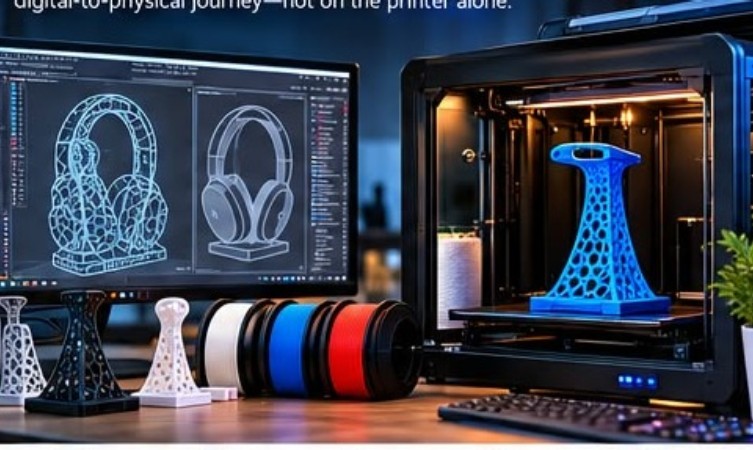
The future of online product selling depends on the quality of the digital-to-physical journey—not on the printer alone.
Before a 3D-printed accessory reaches a customer, it has already completed its first journey. It has moved from an idea into a digital model, through geometry checks and production decisions, and into a form that can be made repeatedly.
Its second journey begins when a buyer discovers it online and decides that the object is worth bringing into their life.
Green Globe Impex Inc. views these journeys as one connected customer experience. The design file, the manufactured item, the product listing and the delivered package should all describe the same promise.
For gaming accessories and workspace products, we regard durability, dimensional consistency and compatibility as design responsibilities—not afterthoughts at dispatch.
An Online Listing Is Part of the Product
Customers cannot pick up an item before ordering. They depend on photographs, dimensions, material notes, compatibility information and honest descriptions of finish.
Good digital merchandising makes the product understandable before it is purchased.
This is particularly important when selling internationally. Measurements should be clear, personalization options should be explicit, and any variation associated with layer-based manufacturing should be disclosed.
Delivery eligibility, shipping costs, import charges and return conditions must be visible at the appropriate stage of the purchase journey.
Three essentials beyond printing
An Online Listing Is Part of the Product
Good digital merchandising makes the product understandable before it is purchased.

Global Reach with Clear Communication
Measurements, customization options, shipping costs, import charges and return conditions must be visible.

Responsible Production
We favor useful, durable designs; validate demand, reduce reprints and evaluate materials against actual product needs.